

Join Bret and Heather for their next Q&A on Wednesday, October 14th https://www.darkhorsepodcast.org/calendar
00:10:06 Q: Hi Bret and Heather, We have a 14 months old daughter and life couldn't be better. Where we live it is standard to bring babies to kindergarden at 8 months. We believe that this is not good for such small babies and that it's yet another problem with modern life. Therefore, my wife has decided to quit her job and is staying at home to take care of our daughter for the foreseeable future. What do you believe to be a good time for kids to go to kindergarden (if ever) and what do you think is a good way to transition into such places? Thank you very much! Albert and Matilda
00:28:53 Q: How is it possible that cats have adapted to safely avoid multiple lanes of traffic and my dog can't be trusted to not walk in front of a bicycle? Are humans somehow responsible because we mollycoddle dogs but let cats roam free? (Shout out to all our cute furry friends whose pics get posted in the chat)
00:58:38 Q: We are all very aware of how much dogs have changed/adapted since we began living together. How symmetric has this been? How much have humans changed/adapted in the canine direction?
01:04:30 Q: As the timeline for the emergence of humans and other homo species keeps going further back with every new discovery, is it possible that some of the other species had domesticated a fellow traveller (doesn't necessarily have to be canid or felid). What candidates, other than the two most popular pets of homo sapiens could have been tamed by early human species 100,000 years ago, if they had sufficient time to thrive as a species and an environment that allowed it?
01:14:46 Q: In watching a Ricky Gervais stand up he discussed a book, Biological Exuberance: Animal Homosexuality and Natural Diversity. Here is my question: how much of the queer animal behavior in evidence is actually homosexual in nature? was the author, Bruce Bagemihl, actually tracking to make sure the gay whale for example wasnt also having heterosexual encounters? could the animals be confused, or desperate, or simply demonstrated social dominance? what differentiates animal sex habits from human? aside from bonobos how many species use sex for pleasure, bonding, or securing resources? ive been humped by my share of K9 but I don't flatter myself that they are in love with me, or are gnomosexual.
01:19:50 Q: Has what we call neurodivergance always been a common thing and we've only recently called it to attention? It seems so many people now are neurodivergent in some regard (I personally believe two of my children have some degree of it and I probably am in some regards). It just seems like it's so common, but is it a result of environmental toxicity or what we deem culturally acceptable or have there always been a wide spectrum of neurodivergent people throughout time and how would our ancestors have talked about it?
01:33:10 Chat: Question after the dog swiffer. Is it true that all peoples and cultures have lived with dogs?
01:37:52 Q: Forgive me if I am incorrectly simplifying a complex system ;) I was in the shower and started wondering, if our bodies store fat as a survival mechanism because our species did not know when its next meal was going to be, would our bodies eventually evolve to not store energy as fat as we get accustomed to eating multiple times a day therefore eradicating obesity?
01:41:09 Q: I’m curious how you approach lawn and home pest care from a health standpoint. What do you use for fertilization, weed control, and insects/pests? Do you avoid conventional fertilizers, herbicides, and pesticides, and if so, what alternatives have you found actually work? I’m also curious about spraying around the exterior of my home to prevent carpenter ants and other wood-damaging insects. Do you think the health concerns outweigh the benefits, or are there safer options you’re comfortable with? I love walking barefoot in my yard, but I can’t help wondering what I may be absorbing through my feet.
01:50:37 Q: Could you please explore your evolutionary perspectives on the genetic evolutionary history of human personality? Specifically, could there be some way, biologically, human personalities differentiated and integrated into clusters of memetic pre-dispositions? Perhaps using genetic tools like adjacent possible variation, establishing what may look akin to Carl Jung's 'archetypes' of human personality. If so, what could a process like this help us learn about the relationship of genes and memes, as well as biology and psychology? Thank you both!
01:56:44 Q: Bret and Heather, you advertise Xylitol products and spoke about its benefits several times. Did the recent Xylitol safety concerns come up on your radar? Will you please review and comment. Thank you. https://www.escardio.org/news/press/press-releases/xylitol-may-increase-the-risk-of-cardiovascular-events https://esc365.escardio.org/esc-congress/sessions/20372-hungry-heart-nutrient-deficiencies-and-cardiovascular-disease https://pmc.ncbi.nlm.nih.gov/articles/PMC11492277/ https://pmc.ncbi.nlm.nih.gov/articles/PMC13016789/
01:59:07 Q: Bret and Heather — I’ve written six books around one question: Where are we, and what should we do about it? I approach that question through an evolutionary lens, and I’ve arrived at a conclusion I’d love to hear you challenge: Humanity has to be exactly where it is right now. Not because where we are is good, but because there was no other path here. Evolution had no foresight. Every organism—including us—could only operate with the capacities available to it in its moment. But something extraordinary eventually emerged from that process: a species capable of noticing the process itself. We can remember, anticipate consequences, compare outcomes, understand selection pressures, and intentionally alter what happens next. So my question is: Does evolution eventually include a species capable of participating intentionally in answering “what’s next?” I think it does. And I think that changes the human conversation from endlessly diagnosing how we got here to asking what we can deliberately select for from here. I’d genuinely like to hear where you think that argument fails. —Travis Anderson
We have "cartesian blinders being put on us so that we are trying to make sense out of scraps of information and hints." - @bretweinstein
WEINSTEIN: I mean, even if you have your villains who are engaged in the behavior that motivated this war in Iran, even if that's the story, presumably most of the people in the path of these ferocious bombings that he is describing are not deserving of going back to the Stone Age.
In fact, I distinctly remember him telling us that part of what we were up to was liberating the people of Iran from their tyrannical regime.
So if it's the tyrannical regime that justifies the ferocious bombing, then it's a tragedy that other people are going to be sent back to the Stone Ages with them. Right?
HEYING: It's it's not a narrative. It's an incoherent set of talking points.
WEINSTEIN: Yeah, it's a kind of cheerleading that is completely inappropriate from the perspective of the president.
Bret Weinstein discusses the Trump administrations "back to the stone age" recent remarks in the latest episode of The Evolutionary Lens, Episode 320 "Are we back in the stone age?" on DarkHorse.
Bret Weinstein explains, "If you stop businesses from starting here, and if you drive people so that they move elsewhere—even though it's difficult to do—then the point is the tax base dries up, which then forces you to become even more predatory for the people who stayed.
And that's really the thing, right? They're setting themselves up so that they have to go after more and more people, because the people who are starting new businesses are not going to do it here."
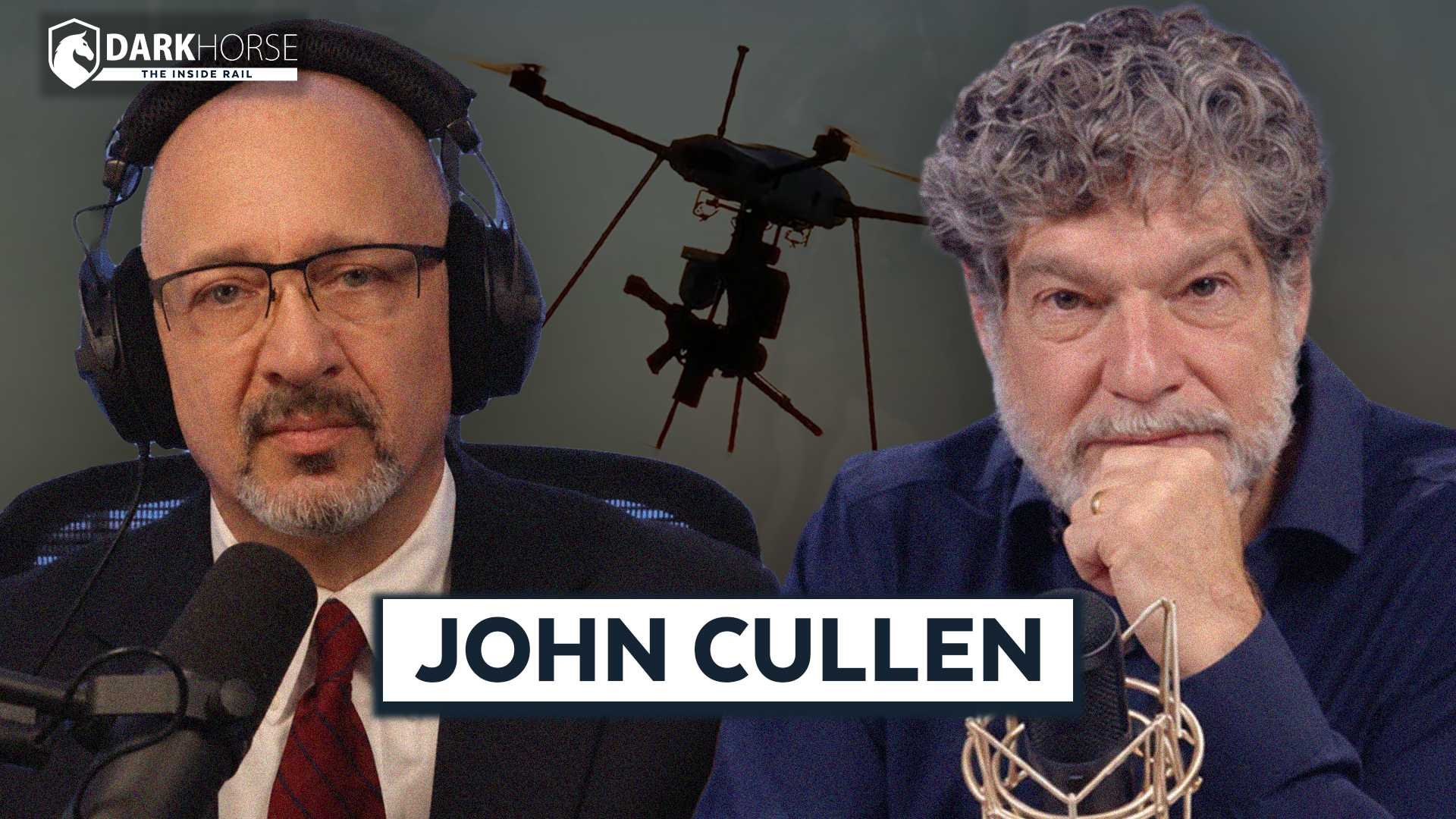
Bret speaks with John Cullen on the subject of the unanswered questions surrounding the assassination of Charlie Kirk and the 2017 Las Vegas shooting.
Youtube: https://youtu.be/7m31LcCTf10
Spotify: https://open.spotify.com/episode/0LEGBkh2yXDTl3QqU38Qid?si=KtxnJF0IT3i4XGhE_Sm0cg
Locals: https://darkhorse.locals.com/post/8227721/the-drone-hypothesis-john-cullen-on-darkhorse
Rumble: https://rumble.com/v7g2ny2-the-drone-hypothesis-john-cullen-on-darkhorse.html
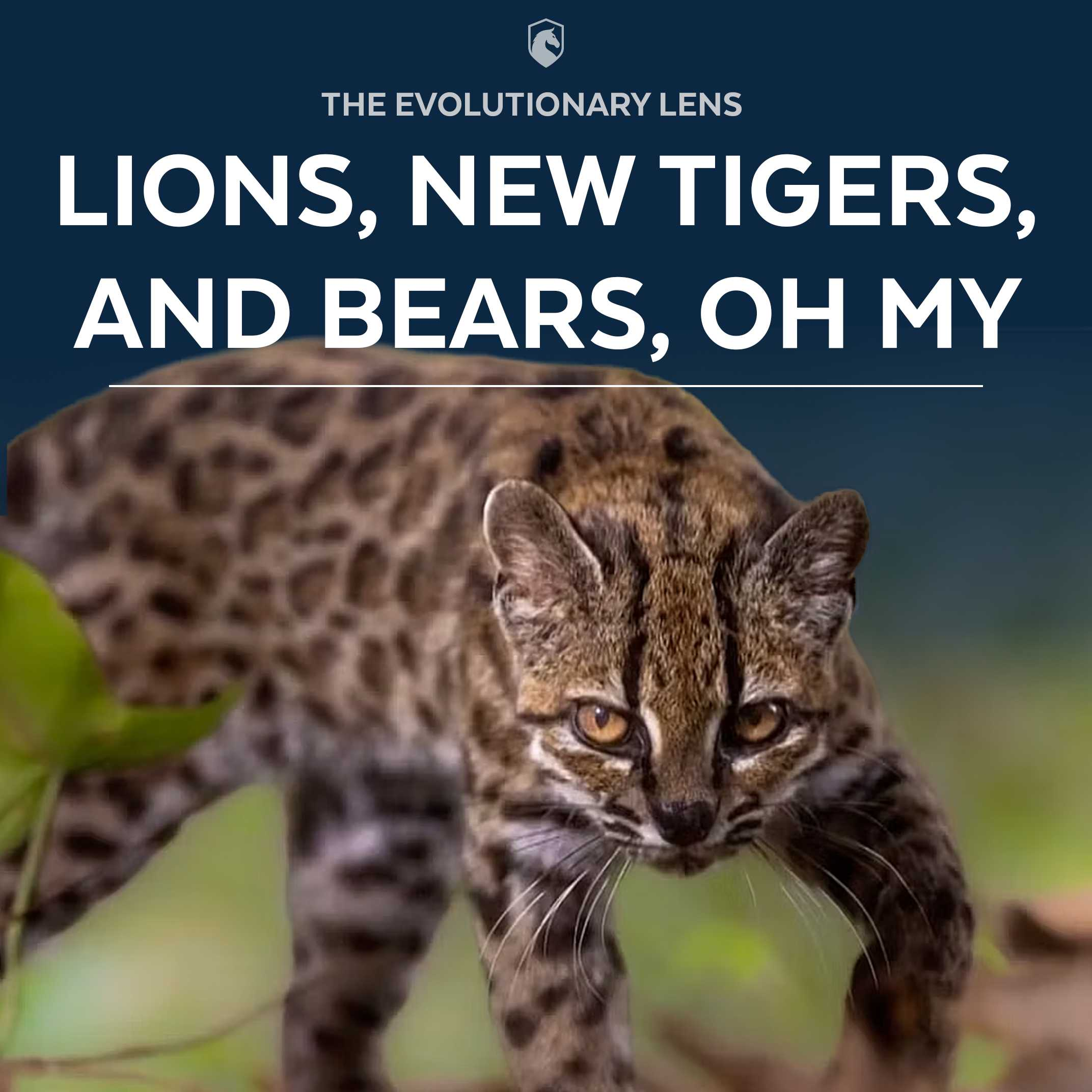
Bret and Heather discuss new cats, fat bears, and overwhelmed frogs. The tilcayo, a newly named species of cat from Bolivia, is part of a group of New World “tiger cats” that live on the outskirts of the Amazon basin. We discuss Carnivoran relationships, cats more specifically, and what is known about the history and ecology of the tilcayo in particular.
Then: it’s fat bear week at Katmai National Park in Alaska, where grizzlies are fattening themselves on salmon for the Winter ahead; we discuss hibernation, reproductive diapause, and general chonkiness in bears.
Finally: female Cope’s gray treefrogs have a harder time choosing good mates when there’s a lot of noise, and when there are too many suitors—kind of like how women often make bad choices when confronted with chaos and wingmen.
Rumble: ...