


We have "cartesian blinders being put on us so that we are trying to make sense out of scraps of information and hints." - @bretweinstein
WEINSTEIN: I mean, even if you have your villains who are engaged in the behavior that motivated this war in Iran, even if that's the story, presumably most of the people in the path of these ferocious bombings that he is describing are not deserving of going back to the Stone Age.
In fact, I distinctly remember him telling us that part of what we were up to was liberating the people of Iran from their tyrannical regime.
So if it's the tyrannical regime that justifies the ferocious bombing, then it's a tragedy that other people are going to be sent back to the Stone Ages with them. Right?
HEYING: It's it's not a narrative. It's an incoherent set of talking points.
WEINSTEIN: Yeah, it's a kind of cheerleading that is completely inappropriate from the perspective of the president.
Bret Weinstein discusses the Trump administrations "back to the stone age" recent remarks in the latest episode of The Evolutionary Lens, Episode 320 "Are we back in the stone age?" on DarkHorse.
Bret Weinstein explains, "If you stop businesses from starting here, and if you drive people so that they move elsewhere—even though it's difficult to do—then the point is the tax base dries up, which then forces you to become even more predatory for the people who stayed.
And that's really the thing, right? They're setting themselves up so that they have to go after more and more people, because the people who are starting new businesses are not going to do it here."

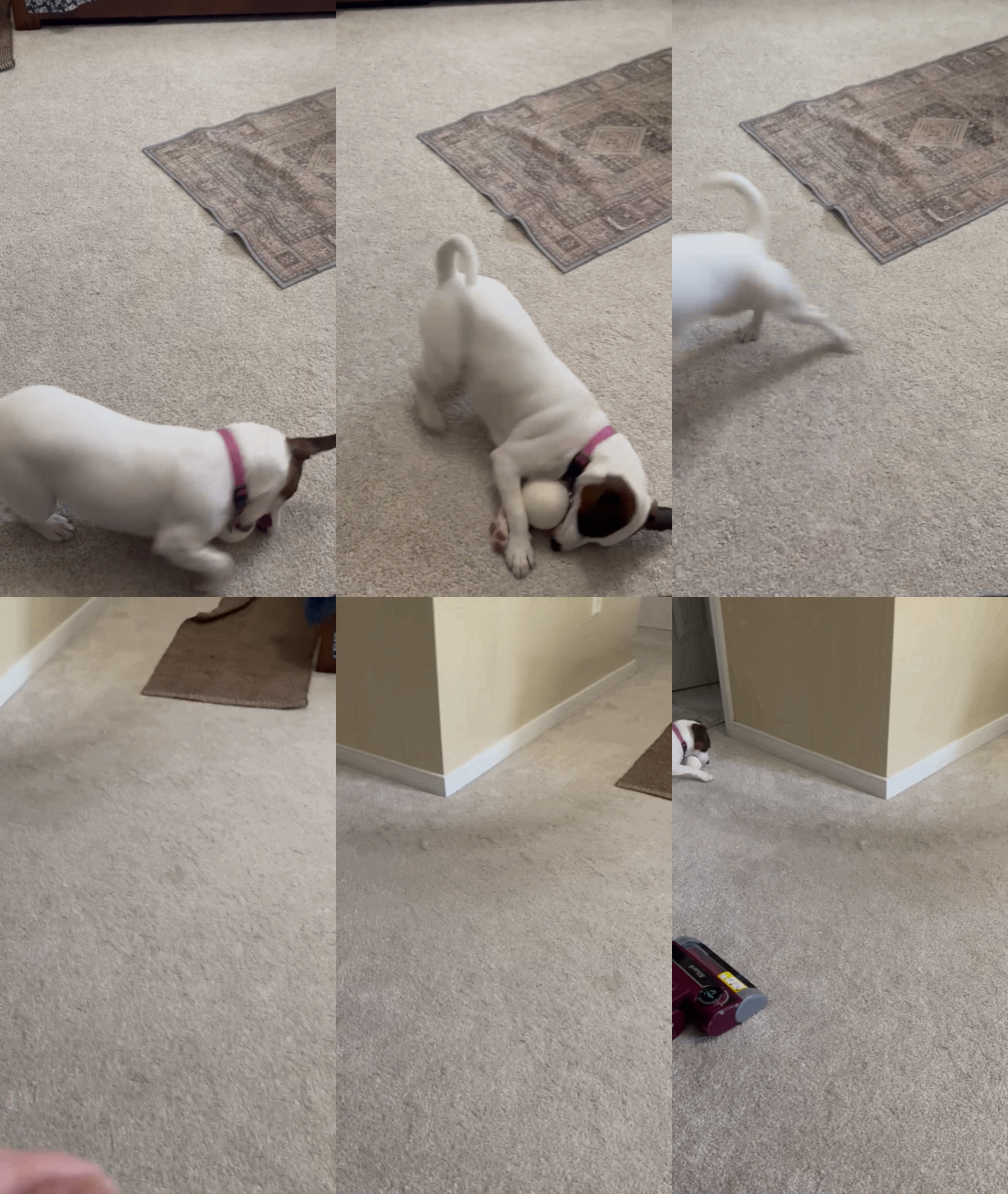
A couple weeks ago @bretweinstein pondered if dogs actually like to chase balls or if dogs enjoy watching humans play chase with them. Lola submits one data point, herself. She enjoys tossing balls to herself, and will while no one is watching. I'm trying to get a better video, she will also grab a tennis ball by it's fluf and launch it straight up, like a lacrosse player throwing a ball. She'll drop them down stairs, drop them off the ottoman, or any other high elevation and chase them. She's also developed a sorta soccer style to nudge them back on hardwood floors. So with test subject Lola, the answer is clearly "dogs love chasing balls".
Boom Bust Cycles of Influence
How fiat audiences capture influencers
What does a massive propaganda or influence campaign actually look like? I think if you want to understand how online warfare takes place, the best model we have is the banking system.
When it comes to the internet, attention is the coin of the realm, and there’s nothing more sought after than an influencer who commands a lot of it. And just like fiat currency, attention can be used to artificially inflate audiences and engagment, essentially astroturfing (whether wittingly or unwittingly) content creators.
Tactic #1: The boom bust cycle
I think bots work as the fiat currency of the online world. Whoever controls the bots can choose to inflate an audience the same way banks inflates the money supply, by creating something out of nothing. To the influencer, it might look like natural growth along with real people too, or perhaps they are incensitivized not to notice (or care). It’s basically the housing bubble all over again.
What I think ...

Hi Folks, I saw the Alex Gibney documentary MUSK today and there is much to parse in it (timing, motivations, biases, flawed assumptions, lack of introspection on the part of the filmmakers, etc etc) but in one particular segment, Gibney claims that there were so many early covid victims in NYC that the City had to rent refrigeration trailers to store all the bodies. I had not heard that story and have zero trustworthy sources to investigate it.
Has anyone done an empirical analysis of that claim?