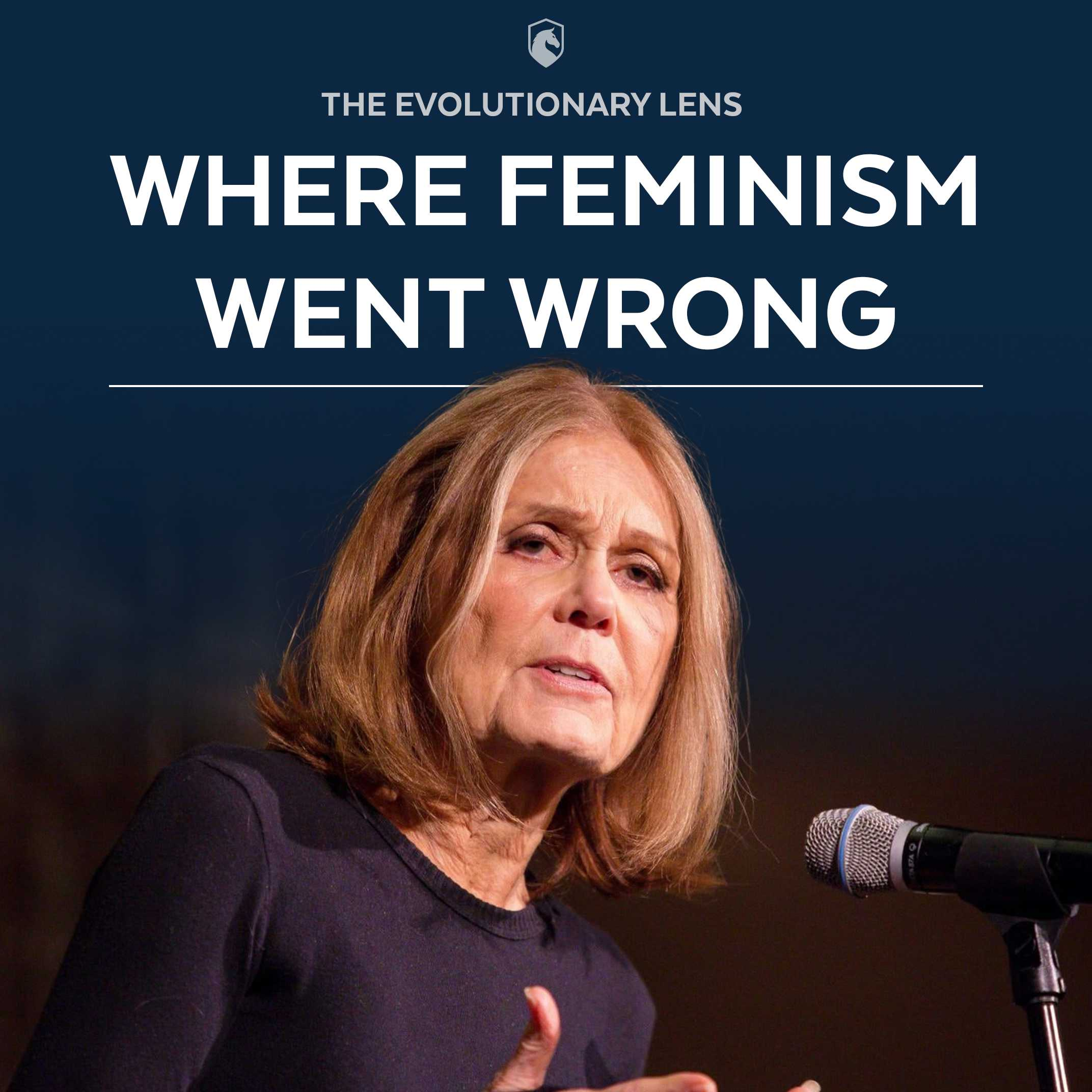


In this 243rd in a series of live discussions with Bret Weinstein and Heather Heying (both PhDs in Biology), we talk about the state of the world through an evolutionary lens.
In this week’s episode, we discuss the evidence for the traps being laid by Goliath, continuing last episode’s discussion of the presidential debate. Then: sex, gender, meaning, and identity. What kind of science is being done that concludes that sex and gender are not just distinct, but unrelated? And why are 10 year olds being asked if they’re transgender, or how much they feel like a boy, or a girl? While “scientists” use models to produce results that make no sense, adolescents stop pursuing meaning, which is dynamic and expands one’s horizons, and instead focus on identity, which is all too-often a static dead-end.
Our sponsors:
CrowdHealth: Pay for healthcare with crowdfunding instead of insurance. It’s way better. Use code DarkHorse at JoinCrowdHealth.com to get 1st 3 months for $99/month.
Manukora: the most flavorful, delicious, and nutritious honey you’ll ever have. Get $25 off your starter kit at www.Manukora.com/DarkHorse
ARMRA: Colostrum is our first food, and can help restore your health and resilience as an adult. Go to www.tryarmra.com/DARKHORSE to get 15% off your first order.
Mentioned in this episode:
Traps abound: https://x.com/thedarkhorsepod/status/1834608617330512197
Dhamala et al 2024. Functional brain networks are associated with both sex and gender in children. Science Advances, 10(28), p.eadn4202: https://www.science.org/doi/10.1126/sciadv.adn4202
Potter et al 2022. Measurement of gender and sexuality in the Adolescent Brain Cognitive Development (ABCD) study. Developmental Cognitive Neuroscience, 53, p.101057: https://www.sciencedirect.com/science/article/pii/S1878929322000019
Potter et al 2020. Early adolescent gender diversity and mental health in the Adolescent Brain Cognitive Development study. Journal of Child Psychology and Psychiatry, 62(2):171-179:
https://acamh.onlinelibrary.wiley.com/doi/10.1111/jcpp.13248
We have "cartesian blinders being put on us so that we are trying to make sense out of scraps of information and hints." - @bretweinstein
WEINSTEIN: I mean, even if you have your villains who are engaged in the behavior that motivated this war in Iran, even if that's the story, presumably most of the people in the path of these ferocious bombings that he is describing are not deserving of going back to the Stone Age.
In fact, I distinctly remember him telling us that part of what we were up to was liberating the people of Iran from their tyrannical regime.
So if it's the tyrannical regime that justifies the ferocious bombing, then it's a tragedy that other people are going to be sent back to the Stone Ages with them. Right?
HEYING: It's it's not a narrative. It's an incoherent set of talking points.
WEINSTEIN: Yeah, it's a kind of cheerleading that is completely inappropriate from the perspective of the president.
Bret Weinstein discusses the Trump administrations "back to the stone age" recent remarks in the latest episode of The Evolutionary Lens, Episode 320 "Are we back in the stone age?" on DarkHorse.
Bret Weinstein explains, "If you stop businesses from starting here, and if you drive people so that they move elsewhere—even though it's difficult to do—then the point is the tax base dries up, which then forces you to become even more predatory for the people who stayed.
And that's really the thing, right? They're setting themselves up so that they have to go after more and more people, because the people who are starting new businesses are not going to do it here."

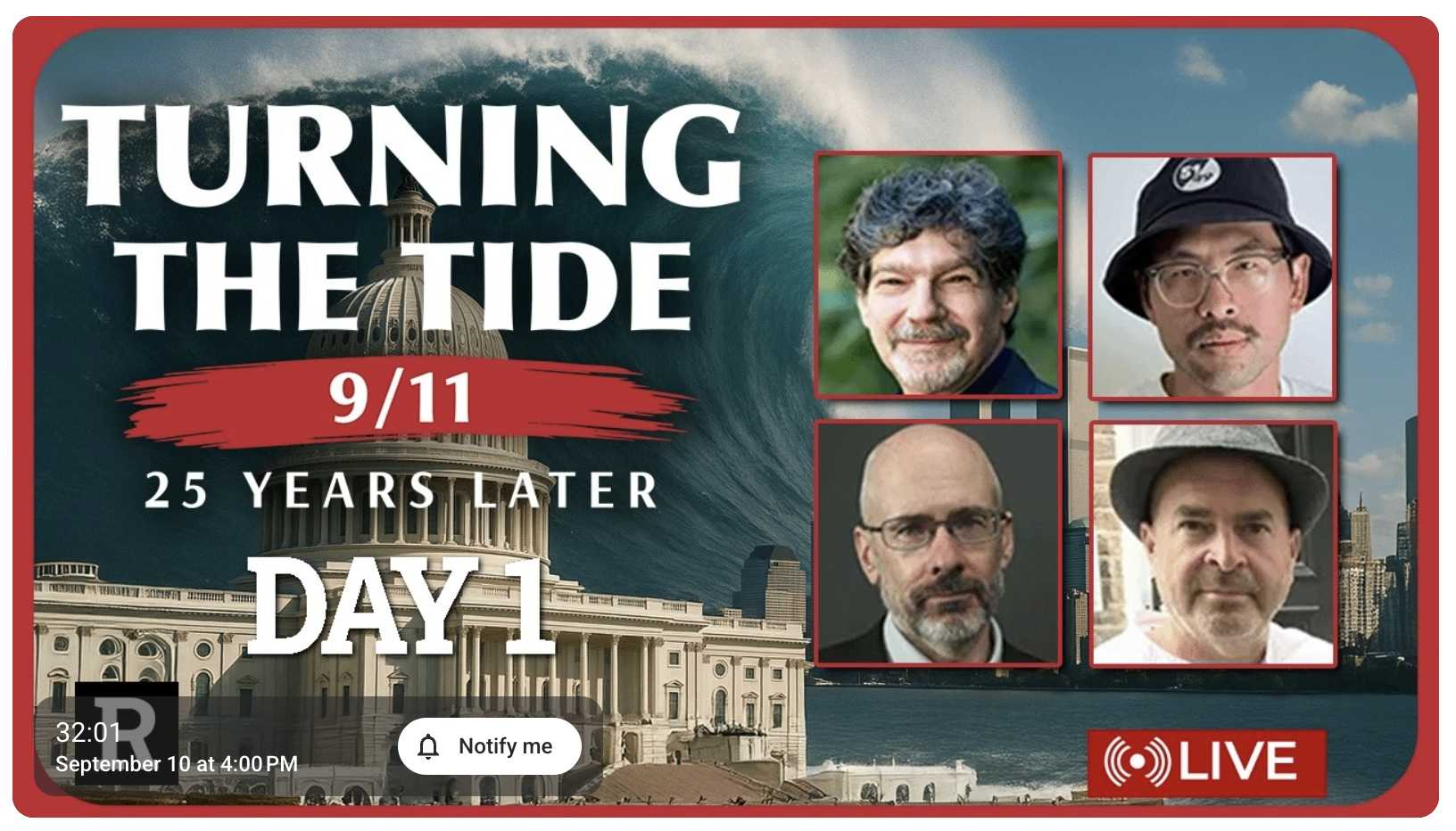
Watch the live stream tonight, September 10th from 10:30 pm to 11:00 pm ET to hear Bret Weinstein speak on “Forensic Science and Conspiracy: How to Be Rigorous When Deception Is Built In.”
Bret and Heather discuss men, women, and feminism; and the love of our pets.
Gloria Steinem died at 92 this week. She exposed working conditions at Playboy clubs in the 1960s by going undercover as a bunny; founded Ms. Magazine in the 1970s; took Ms. ad free in the 1990s, and became a feminist icon. We discuss her legacy, both good and bad.
Then: cats, dogs, and the differences between them.
Youtube: https://www.youtube.com/watch?v=NdHiyEUZlus
Rumble: https://rumble.com/v7f2w2a-the-342nd-evolutionary-lens-with-bret-weinstein-and-heather-heying.html
Spotify: https://open.spotify.com/episode/6uB7o3hbkBcLUangYN6tcs?si=Ggfoaz0GT8qWJ2VYZJ2FOg
X: https://x.com/i/broadcasts/1XxygwLmDPNGM
DarkHorse is available with timestamps on all popular ...