
The Fugue State of the Union
By Clare Driscoll
Amnesia, the bane of progress.
An elementary school teacher once confided in me that she dreads the first day of the school year. She has resigned herself to the futility that much of the previous years’ schooling is fated to evaporate from her students’ minds in the warm lethargy of summer. I quietly suspected the kids may have failed to meaningfully learn these lessons in the first place.
I wonder if they were taught that members of the UN spent the summer of 1963 convening in Rome at a conference on international travel and tourism, during which they decided that abolishing passports on a global scale would be infeasible.1 Perhaps this would make no sense without a prerequisite history lesson explaining that our not-so-distant ancestors enjoyed the freedom to travel the world without presenting personal documentation. It wasn’t until World War I that governments of warring countries enacted mandatory passports to monitor when and why travelers were crossing their borders.2 It was a temporary violation of our rights, tolerated to ensure public safety during a time of crisis.
Yet, there the United Nations representatives were, only a generation later, the lesson abandoned to the warm delirium of a Roman summer.
Perhaps it is too much to ask that the generation of children who grew up associating a flight to grandma’s with a full inquisition and a borderline-cavity search question the unconstitutional precedent of their boarding documents. Maybe we failed to convey to them the ease with which we were able to travel pre-9/11, when you could show up late to a flight and take your seat minutes later with scissors and hand lotion in your carry-on.3 Again, an external threat was leveraged to impose unprecedented limitations on our freedom. It was a temporary violation of our rights, tolerated to ensure public safety during a time of crisis.
When history makes apparent its rhyme scheme, we are fools not to anticipate the resolution of the coming stanza.
In Thanksgiving of 2019, my fiance and I passed around viral videos of Chinese nationals being welded into their apartments by the Xi-Jingping-led government alongside the turkey and mashed potatoes.13 We fell silent watching people trapped on the third floor lower their pets down on strings for a chance to relieve themselves—or, maybe, to escape. Some of the strings snapped at height. What novel threat was being leveraged to enact this level of tyranny? “That could never happen here,” I kidded myself, burying the distasteful sentiment beneath heaped forkfuls of pie.
Then, in the spring of 2020, the same characters who oversee the mass spraying of carcinogenic pesticides in urban spaces4 and promote the dietary recommendations that encourage me to swap out saturated animal fats for industrial lubricants5 told me to barricade myself in my home out of what they presented as a genuine concern for my health. The new SARS-CoV-2 pandemic was the perfect crisis: foreign and mysterious, steeped in subtle xenophobia and not-so-subtle assumptions about third world hygiene. We didn’t need Xi Jingping’s goons to weld us into our homes – most of us stayed in voluntarily. I was living on a boat in San Diego, a lifestyle built around prioritizing unlimited access to the outdoors over conveniences like indoor plumbing. The beaches and parks weren’t just my backyard anymore. Now, they were political territory.
When Governor Gavin Newsom decreed that walking was permitted at the beaches, but that stopping to watch the sunset could incur a $1,000 fine or 6 months jail time,6 I looked to my fellow Californians to point out the obvious. I expected people to acknowledge that these mandates were as upside down as the food pyramid; as hyperbolic as the demonization of sunlight; as flimsy and ephemeral as the polypropylene masks that now littered the once pristine streets of our beautiful coastal town. I expected them to ask to see the peer-reviewed multivariate analyses on the effects of various forms of beach transit on viral transmission that must have informed such a Draconian decree.
Instead, Californians outsourced their critical thinking. We performed a-scientific compliance rituals at the altar of our esteemed experts. We pirouetted around common sense to the tune of Fauci’s fiddle. Some of the least healthy people I knew were suddenly compelled to remodel their entire personalities around staying healthy, which now meant applying hand sanitizer as they pulled into the McDonald’s drive through. Fear signaling had become the latest fashion statement. We wore hula hoops and cardboard boxes to the grocery store to signify our commitment to social distancing. We made students wear masks for eight hours a day, but cut holes in them so that they could still play their instruments in band class.14 Front-line doctors and nurses performed coordinated dance routines on social media, careful to pair their jazz hands and rhythmic gyrations with appropriately sad looks.
The pandemic was a mockery of disease-prevention in which we dared each other to laugh. Governor Newsom likely did laugh at the theatrical plight of the common-folk while he ate dinner at a Michelin star restaurant in Napa Valley with his rich friends amid his own restrictions on dining out.8 This wasn’t an exercise in caution—it was a humiliation ritual, a perverse distraction with nebulous motives. When kids continued to use the skate park, Governor Newsom had it filled with thousands of pounds of sand.9 When the devout continued to assemble, he banned singing in Church.10
I have since spoken with people who recount their pandemic experience so differently than mine that I have been left to wonder whether the decision to resist the Covid mandates was a quantum node at which our once shared reality bifurcated into separate instances. Perhaps we begun down non-intersecting paths at that point, never to truly converge again. Perhaps this is the manner in which all resistances beget new communities.
Others have recounted to me a state of sustained torpor, of suffocating isolation, the darkness of their four walls punctuated by the blue glow of the computer screen; the prevailing depression that blurred the days into the nights and the weeks into months. I am made sick merely envisioning this. In that manner, I have to wonder whether many were influenced to become the architects of their own disease, self-fulfilling prophecies that conveniently bolstered the narrative in a viscous ouroboros.
It was the same classic liberalism that has driven me to be vaccine-skeptical and critical of health experts in that past that rendered me morally incapable of obeying these mandates. My fiance, who has always leaned right of center, felt the same. Our beliefs overlap on the much less popularized vertical axis of the political compass—the one representing the spectrum between tyranny and freedom. Imagine my surprise when even old friends interpreted my noncompliance with pandemic mandates as alt-right extremism. Imagine his surprise when the same liberals who regarded him as a bigot for acknowledging the biological basis of sex accused him of “denying science.”
As the compliant suffered the toll of physical isolation, we became abruptly shipwrecked on an ideological island. While later protests may obfuscate this detail in the collective memory, the initial level of adherence to the mandates was staggering. We drove down empty six-lane freeways during rush hour. When we tried to park at a favorite hidden spot to watch the sunset from our car, we found it inaccessible—not because of the usual wait for parking, but because it had been blocked off by heavy chains. We saw only handfuls of people when we went out, few and far between, but we all exchanged the same knowing look—we weren’t buying it. San Diego had become a ghost town, and we were the restless spirits that haunted it.
When Governor Newsom shut down the open-air farmers markets,1516 we drove out to an unmarked warehouse to buy from the farmers directly. For people acting in direct opposition to health mandates, those in line with us looked remarkably healthy. These weren’t the ignorant backwoods rednecks the media was scapegoating as super spreaders and grandma-killers; these were critical thinkers of all ages and all political orientations. Whether or not they believed that the purported virus posed a threat in the first place, they certainly didn’t buy the narrative that isolation and the complete cessation of normal life were more preventative against disease than fresh air, sunlight, and human connection. Some of them donned protective gear; most didn’t. The difference here was that it was by choice. We were united not by orientation but by purpose: we were not willing to entertain a temporary violation of our rights under the guise of ensuring public safety during a time of crisis.
It was July of 2020 when a police officer stopped my fiance and I on our morning walk and ordered us to leave the city park in which our marina was located. We were polite in our opposition, but his attitude strongly indicated that he thought fresh air was a luxury to which we felt wrongly entitled. When we informed him that our home was in the park, he instructed us to go back to our boat. If we came outside again, he would issue us a citation for disobeying the order of a peace officer—such was his commitment to our health. For once, we chose to comply. We didn't leave the boat. Instead, we pulled up anchor and crossed 86 miles of shimmering ocean to the Channel Islands. We dropped anchor offshore of Santa Catalina. Our ideological island, physically manifest.
Given Catalina’s small year-round population and inaccessibility except by boat or small plane, we had surmised that the island would be relatively free from pandemic restrictions in practice—and we were right. The only reminder that the island was technically a part of LA County was the lone sheriff stationed on the main tourist beach, who halfheartedly implored unbothered passers-by to wear a mask. The culture of fear lacked the fuel it needed to survive here in the sun-soaked sands and glistening azure depths. Displaced from their jobs and schools, families had convened at this island paradise to meaningfully spend their time together while the rest of the world seemed to have stopped turning. We speared bass and halibut and picked pink cactus fruit from the foothills of the mountains. We held potlucks with new friends on the beach and talked until the bonfires fizzled out in the night. Something about returning to nature, with the clear incongruity between the divine glory of the natural world and the unnatural stipulations being placed upon our natural rights, held the power to shake people from their Covid daze. It was a bittersweet Eden in which we mourned the loss of our peers, who seemed trapped in a fog of propaganda and fear mongering.
So easily we forget such lessons to the comforts of summer. But, autumn arrived, delivering the chill of gnosis. Mail-in ballots would be used largely in a highly contested presidential election. Nearly a year into the circus, were we getting a peek behind the tent? The rationale was that the same citizens who insisted that a thin, highly permeable mask was enough to keep them safe at a restaurant or the gym, many of whom had spent their summers assembling at BLM rallies, were too concerned about viral transmission to vote in person—even while wearing PPE. The beaches and parks had reopened, people were returning to work, and the push for these ballots seemed more politically convenient than it was reasonable. I found that many of the same people with whom I had previously discussed voter fraud ad nauseam when it pertained to Al Gore’s loss in 2000, or Jill Stein’s claims in 2016, were unwilling to have the conversation when it didn’t benefit their own political persuasion. In the end, over 86% of the vote in California came from mail-in ballots.11
In September, VP candidate Kamala Harris had famously declared that she would not take a vaccine released by President Trump before the election. I suppose those last three words constituted the operative phrase. A few weeks after winning the election, she proudly took the same vaccine on camera and urged the public to follow suit, effectively announcing the impending end of the pandemic.12 Was it possible we had been held hostage all this time in order to affect the outcome of an election? Were children wrenched away from friends and out of schools so that unprecedented numbers of notoriously unreliable mail-in ballots would seem appropriate? Had loved ones died alone in the hospital just for optics? If a vaccine that was cobbled together in an afternoon and not demonstrated to confer any immunity to the virus was enough to reopen society, might we need not have shut it down in the first place?
I didn’t get sick. None of my family or friends experienced serious illness. I do not take this for granted, but I do take it as data. Perhaps we were all lucky. Perhaps we are an anomalously healthy and resilient community. Perhaps Covid was a self-fulfilling prophecy that affected people proportionate to their level of indoctrination. The few acquaintances I have who describe poor health during the pandemic blame not the disease but the repercussions of the lock-downs on their physical and mental health. Only my vaccinated friends and family experienced significant lasting health problems. One lost his sense of smell post-injection, and now nothing will ever taste the same again. I think many of us echo this sentiment.
When we allow our fellow man to rescind our rights, even in a temporary capacity, we are retroactively viewing them as alienable—provided only by the grace of our government. This is a precedent we will pay dearly for setting. When the cystic acne scars from our masks have faded, and the stickers on the ground instructing us to stand 6 feet apart have all been sun-bleached and scattered, we must not lose this lesson to the obliviating bliss of the summer that follows. When the implementation of vaccine passports is discussed, we need remember that passports were only ever tolerated as a temporary wartime measure.2 When digital ID is pitched as a way to keep kids safe online, we should consider the value of that data in the wrong hands. When “green” policies target blue collar workers’ trucks but not billionaires’ private jets, we must not let our compassion cloud our judgment. Question why the solution they propose always involves the diminishing of our power and never of theirs.
A new generation is learning that mandatory lock-downs are something their government can, has, and should do. We cannot afford to forget this lesson.
Amnesia, the bane of progress.
@DarkhorsePod @heatherheying @DHProdJenn

We have "cartesian blinders being put on us so that we are trying to make sense out of scraps of information and hints." - @bretweinstein
WEINSTEIN: I mean, even if you have your villains who are engaged in the behavior that motivated this war in Iran, even if that's the story, presumably most of the people in the path of these ferocious bombings that he is describing are not deserving of going back to the Stone Age.
In fact, I distinctly remember him telling us that part of what we were up to was liberating the people of Iran from their tyrannical regime.
So if it's the tyrannical regime that justifies the ferocious bombing, then it's a tragedy that other people are going to be sent back to the Stone Ages with them. Right?
HEYING: It's it's not a narrative. It's an incoherent set of talking points.
WEINSTEIN: Yeah, it's a kind of cheerleading that is completely inappropriate from the perspective of the president.
Bret Weinstein discusses the Trump administrations "back to the stone age" recent remarks in the latest episode of The Evolutionary Lens, Episode 320 "Are we back in the stone age?" on DarkHorse.
Bret Weinstein explains, "If you stop businesses from starting here, and if you drive people so that they move elsewhere—even though it's difficult to do—then the point is the tax base dries up, which then forces you to become even more predatory for the people who stayed.
And that's really the thing, right? They're setting themselves up so that they have to go after more and more people, because the people who are starting new businesses are not going to do it here."
Longtime follower and fan of Heather and Bret. I've been inspired and influenced by the application of the scientific method to non-scientific topics. Happy to be joining this community, planning on ordering some Birkenstocks to consummate the occasion. LOL
Someone on here might know this. I subscribed to support Bret Weinstein because a) I like his work and b) I'm trying to get data on Covid19 mRNA vaccine injuries and don't know where to start looking.
I sent Bret an email and got a response that the best way to get a hold of him is to join this community, so I did. I sent a "Contact Us" request to get in touch with a creator which Bret will hopefully see and respond to but in the mean time if there is anyone out here who could point me in the right direction for that Covid19 mRNA vaccine injuries data, I would really appreciate it.
Thank you for your time.
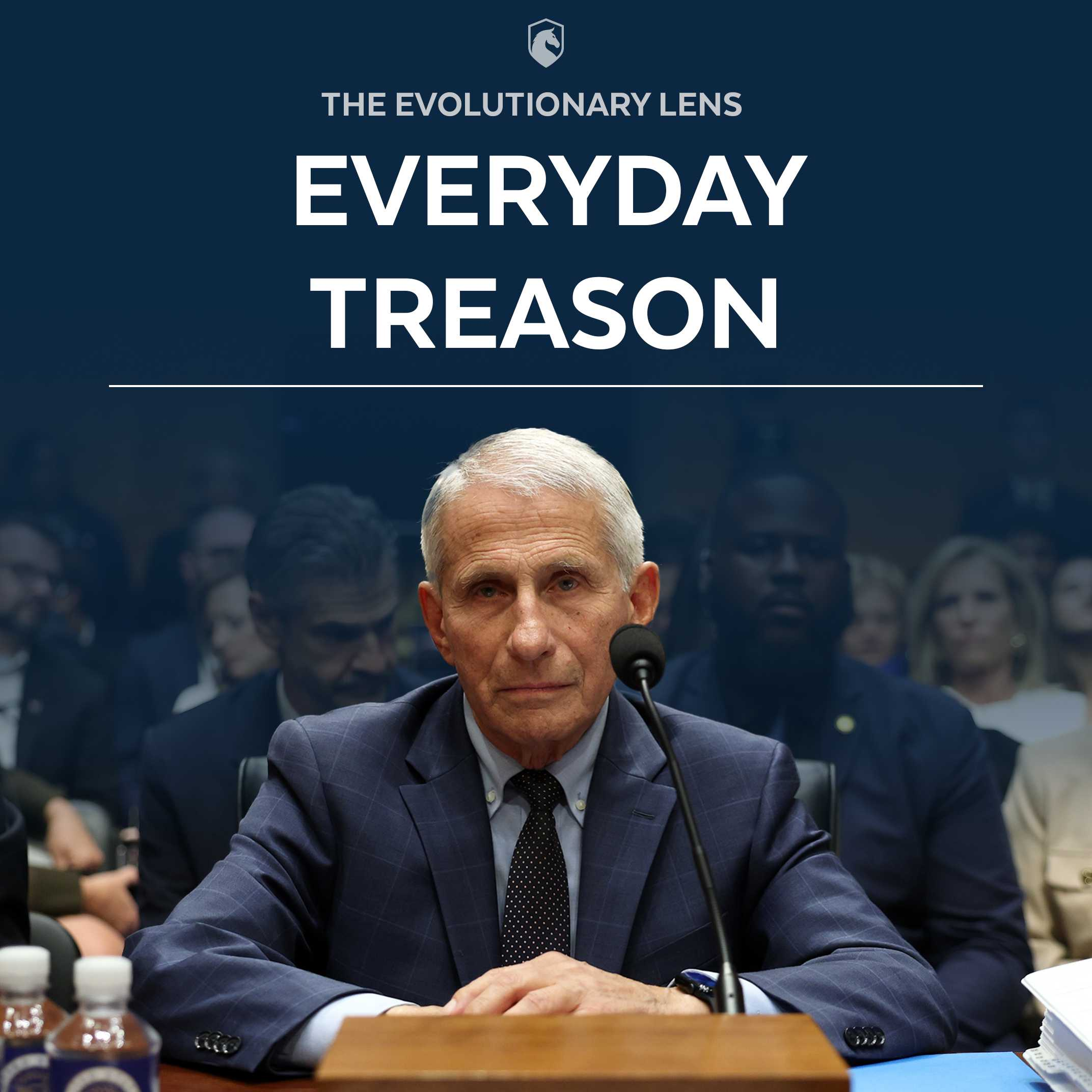
Bret and Heather discuss the Covid Era in light of the Senate Hearing on the testimony of Anthony Fauci.
First: excerpts from several Covid Era Stories, reminding us of the atrocities, tragedies, and ludicrosities (yes) of that time.
Then: is Fauci’s refusal to answer any questions put to him by members of the committee on Homeland Security and Government Affairs evidence that he is, in effect, a made man? We the people deserve answers, and the government should work for us—but it does not appear to do so. The polarization is as stark as possible: democrats think Fauci is science, republicans see Fauci as a great harm to science.
Youtube: https://www.youtube.com/watch?v=N3pDT_XXQ28?
X: https://x.com/i/broadcasts/1mGPaaMbVMDJN
Apple: ...