

"I get it. And it’s not that it is impossible to imagine robotic teachers doing an excellent job, but it is stunning to watch a sophisticated person fail to recognize what happens when you think that that’s what you’re going to produce, and you set it in motion.
Let me point out that Wikipedia has many of the advantages that Melania is describing in this video. It is completely democratizing of knowledge, such that it doesn’t matter where on earth you are. If you have an internet connection, you’ve got Wikipedia. It’s like an extension of your own mind, and it will make us all brilliant.
Now, of course, that didn’t happen, did it? Wikipedia is a hellscape of misinformation, much of it targeted based on a political agenda. We are less certain of what we know, and less capable of reasoning on our own.
Now, that doesn’t all come from Wikipedia, but my point is the promise of Wikipedia was not realized. And what we got instead is arguably worse than what we had before it was invented.
The same thing is virtually guaranteed here, because you’re talking about not only the capability of educating students using a robot that has vastly more knowledge than a human teacher would, but you’re talking about the irresistible opportunity to capture those minds and steer them in one direction or another, whether that’s political or economic.
The idea that these robotic teachers are going to be immune to the kind of flights of fancy that have ruined teaching in the modern era is preposterous. In fact, they will likely be even more easily steered.
I would caution everyone to simply realize the distinction between complicated systems and complex systems. AI is a complex system. Human beings are complex systems.
And any time you intervene in these systems, thinking you know what’s going to happen, you’re going to be embarrassed by the discovery of the unintended consequences that will come to dominate your project.
As much as I like the idea of smarter, wiser, more empathic teachers, and as much as those possibilities do exist in the space of AI, we are still at a very early point in this revolution, and anybody who thinks they can predict it with this kind of precision is actually a hazard."
We have "cartesian blinders being put on us so that we are trying to make sense out of scraps of information and hints." - @bretweinstein
WEINSTEIN: I mean, even if you have your villains who are engaged in the behavior that motivated this war in Iran, even if that's the story, presumably most of the people in the path of these ferocious bombings that he is describing are not deserving of going back to the Stone Age.
In fact, I distinctly remember him telling us that part of what we were up to was liberating the people of Iran from their tyrannical regime.
So if it's the tyrannical regime that justifies the ferocious bombing, then it's a tragedy that other people are going to be sent back to the Stone Ages with them. Right?
HEYING: It's it's not a narrative. It's an incoherent set of talking points.
WEINSTEIN: Yeah, it's a kind of cheerleading that is completely inappropriate from the perspective of the president.
Bret Weinstein discusses the Trump administrations "back to the stone age" recent remarks in the latest episode of The Evolutionary Lens, Episode 320 "Are we back in the stone age?" on DarkHorse.
Bret Weinstein explains, "If you stop businesses from starting here, and if you drive people so that they move elsewhere—even though it's difficult to do—then the point is the tax base dries up, which then forces you to become even more predatory for the people who stayed.
And that's really the thing, right? They're setting themselves up so that they have to go after more and more people, because the people who are starting new businesses are not going to do it here."
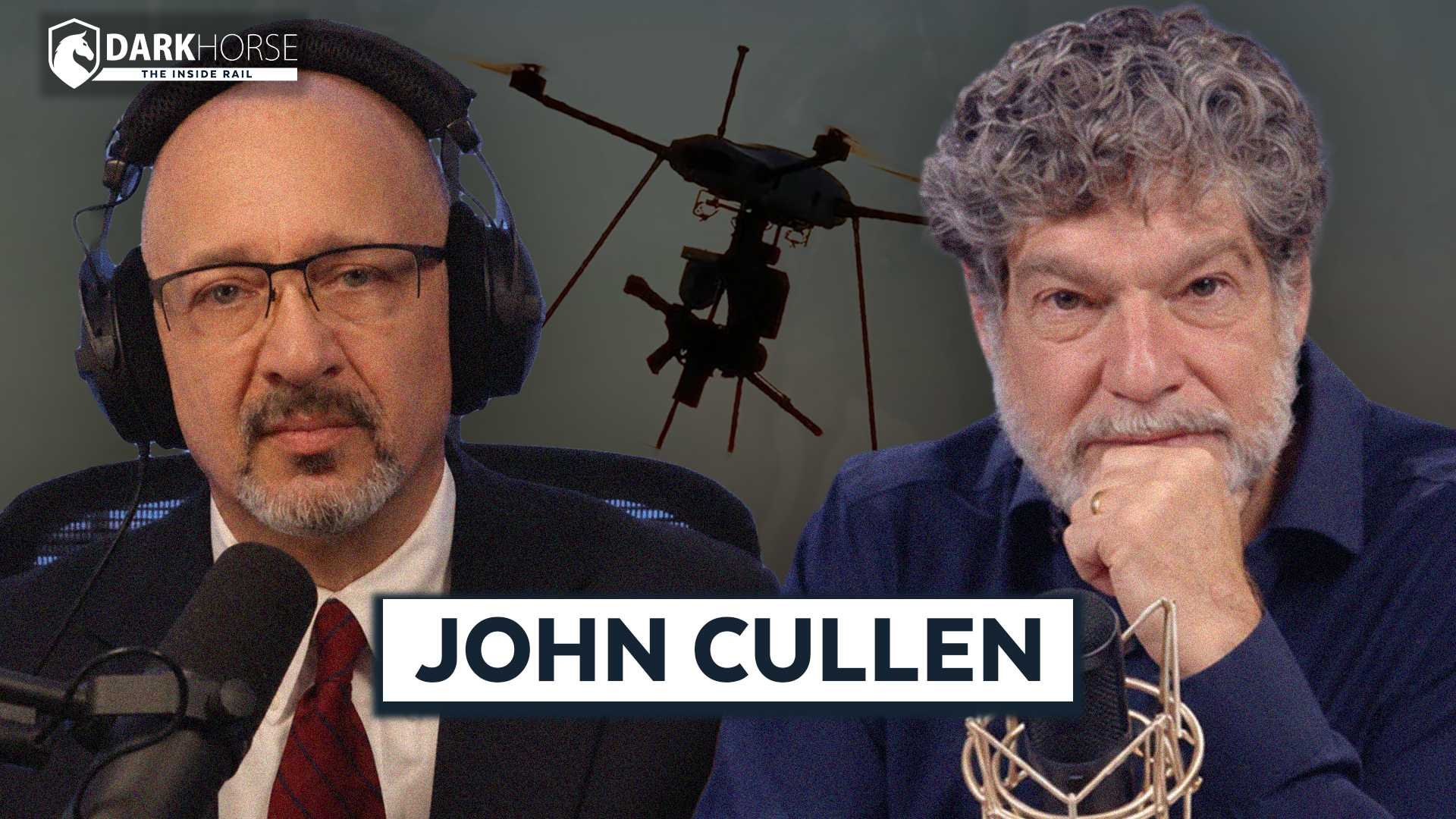
Bret speaks with John Cullen on the subject of the unanswered questions surrounding the assassination of Charlie Kirk and the 2017 Las Vegas shooting.
Youtube: https://youtu.be/7m31LcCTf10
Spotify: https://open.spotify.com/episode/0LEGBkh2yXDTl3QqU38Qid?si=KtxnJF0IT3i4XGhE_Sm0cg
Locals: https://darkhorse.locals.com/post/8227721/the-drone-hypothesis-john-cullen-on-darkhorse
Rumble: https://rumble.com/v7g2ny2-the-drone-hypothesis-john-cullen-on-darkhorse.html
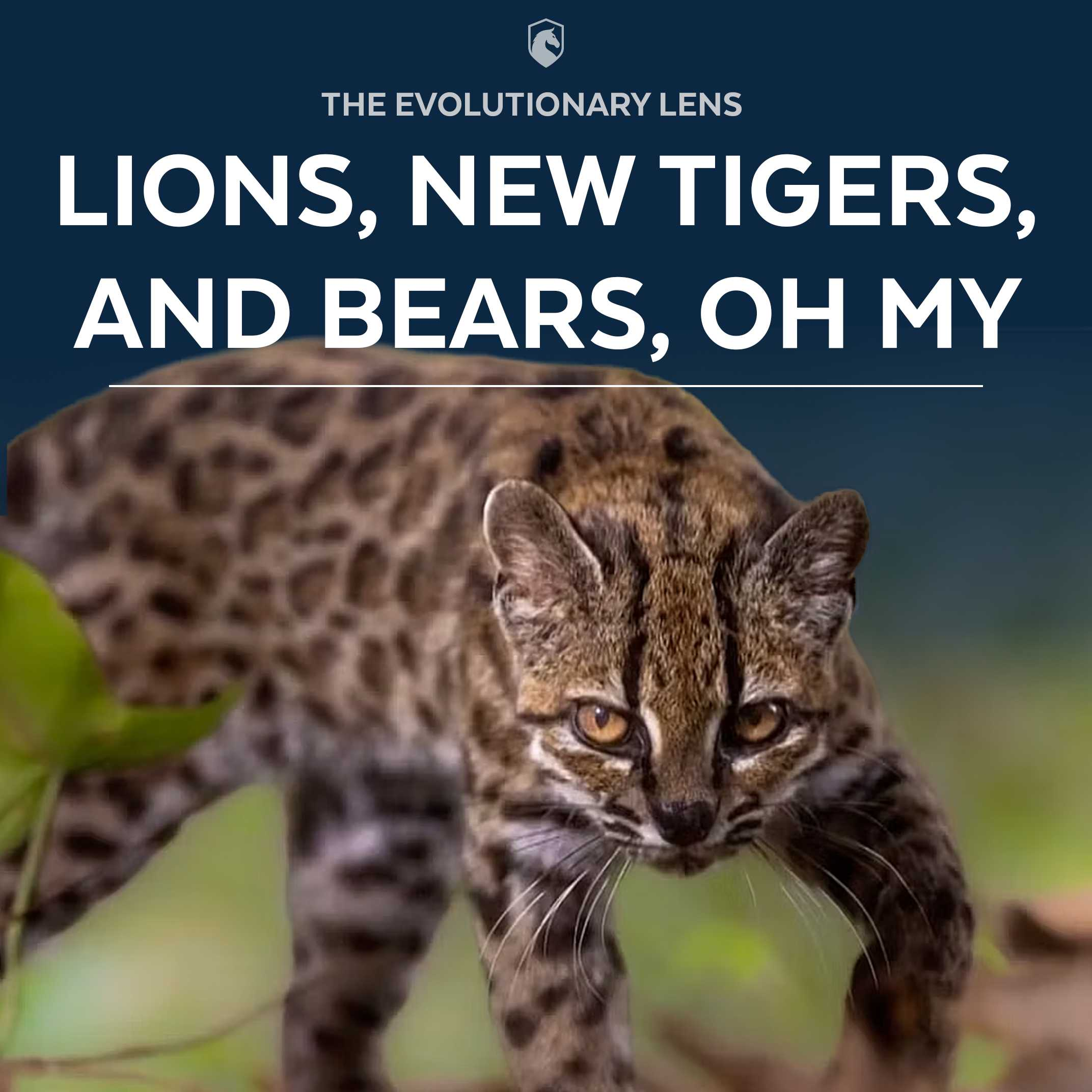
Bret and Heather discuss new cats, fat bears, and overwhelmed frogs. The tilcayo, a newly named species of cat from Bolivia, is part of a group of New World “tiger cats” that live on the outskirts of the Amazon basin. We discuss Carnivoran relationships, cats more specifically, and what is known about the history and ecology of the tilcayo in particular.
Then: it’s fat bear week at Katmai National Park in Alaska, where grizzlies are fattening themselves on salmon for the Winter ahead; we discuss hibernation, reproductive diapause, and general chonkiness in bears.
Finally: female Cope’s gray treefrogs have a harder time choosing good mates when there’s a lot of noise, and when there are too many suitors—kind of like how women often make bad choices when confronted with chaos and wingmen.
Rumble: ...