
00:00:00 Holding Screen
00:02:07 Q&As Remind Heather of Being a Professor
00:09:46 Bret & Heather in the Chat
00:13:54 Q: Hi Heather and Bret. I’ve just lost my mum to a massive stroke. Of course my first thoughts were that she took some of the Covid shots and whether they contributed to her passing. I know I’m going to have to grieve and I remember Bret’s great advice: “grieve well”. I intend to. Do you have any advice for when your bereavement is tainted by anger for something that could’ve potentially been the cause?
I used to love proudly playing her your responses to my questions. If you get round to responding to this one, it will be bittersweet. I’m really going to miss her.
00:26:36 Q: We avoid ultra-processed foods and cook whole foods from scratch — we’re big believers in the MAHA approach to eating real food. But we keep running into a contradiction we can’t resolve: protein powder seems to be the textbook definition of an ultra-processed food, yet it’s universally treated as healthy. We’re not asking about quality — we use the best protein powders, vitamins, and supplements we can find, including ARMRA. So setting quality aside entirely, what actually makes something like protein powder or colostrum biologically different from the processed foods we’re told to avoid? Is there a coherent distinction, or is it just cultural (pun was for Bret!)?
Q: I bought Puori Vit D after you mentioned it before. The purity test clearly states that only the contents of the capsule is tested, not the capsule itself. After I queried them about the origin of both the caramel color and the gelatin, they first pointed me to the test, and then when I pointed out the note about the contents and not the capsule, their product team mysteriously got real busy and haven't gotten back to me, despite numerous follow ups. I would suggest you ask them about it before fully endorsing them (not saying this is on you, I bought it, just mentioning it so you know to check).
00:51:14 Q: I am a registered nurse. I've always been a little skeptical about the "Here's a pill for your latest complaint" approach within the medical system, but my eyes were really opened during the covid debacle. Now I question nearly all "conventional medicine"
Please discuss the pros and cons of preventative medicine recommendations such as mammograms, pap smears, colonoscopies, and other "health screenings." I'm 61 years old, not taking any prescribed medicine, in good health, and don't have health insurance since I lost my job for insisting on being part of the control group for the biggest experiment on humans. (That's how I refer to loosing my job for refusing the so called vaccine. ) Thank you for all you do!
01:08:47 Do you take any precautions engaging in Near Infrared light therapy? Are you aware of any particular risk to children?
01:11:00 Hey Bret and Heather! One thing I admire about you two is your ability to stay sane during insane times. How do balance engaging with a hyper novel world without being destroyed by it? How do you know when it’s time to put down the Epstein files and go look for hibernating frogs?
Serious question: How are you maintaining your sanity through these times of insanity? Are you certain that you are? If you’ve never seen it, please watch the documentary MIRAGE MEN to see what I’m actually asking. There are agents out there manipulating us with "information" meant to make us go crazy. Thank you for everything you're doing, you are PUNK ROCK.
01:22:04 Q: I have a hypothesis that kind of spins off Helen Andrew’s statement that wokeness = feminism.
Im not a scientist just a regular mom & grandma who is deeply concerned about the younger generations and the widening gap between the sexes.
Is it possible that modern women’s widespread unhappiness is largely a result of them being pushed away from the home where their strengths are highly valued and into a more masculine broader society where their greatest strengths actually translate to weakness at best and dangerous in the extreme?
As an example, in your home most people prefer personal empathy over rationality. Likewise to some extent in your broader immediate community. As you transfer to business and governing though, the inverse is necessary. Personal empathy for 300 million people is impossible at best.
Q: re 311 in which you talk about gendered differences in empathy. While my POV rarely conflicts with yours, here I see things differently. Even if someone is in the wrong, on the unjust side of fairness, I'd argue they still deserve a place in the healer's tent. Maybe evolution says our ancestral kin would excise that person from the tribe, but I think I'd find more longterm utility a society in which even unjust actors are due an empathic place for healing to occur, so that they can be made right, and whole, and ultimately become just actors in their own right.
This is the basis of rehabilitation, yes? Someone has to believe they are worthy of rehab. Maybe it's the over-empathizers among us who are built to fill that role.
01:40:04 Hello Heather & Bret. I found myself living in the 1984 book: my husband & I came up with a safe word to prove our identity to each other. And we wrote it down, we didn't discussed it or voiced it. Is this all futile, crazy and ridiculous (insert professor's Lupin voice here) that we are here. I don't want to be here. Any thoughts? Thank you and much love to you both.
01:42:27 My wife and I are increasingly concerned about the state of public schools. We have a three year old and would prefer not to homeschool unless absolutely necessary. We recently moved to what is considered a great public school district.
Do you have a sense for how many public schools are still more benefit than harm? What special or unique correctives will we need to make at home?
01:58:59 In one of your recent episodes, you and Heather each defended the principle that the act of first hand observation is valid despite the claims that some paper you were both critiquing was claiming that science could only be done against data collected in some more robust fashion, which leads me to ask Bret: why then do you dismiss the paranormal, specifically the concept of ghosts, which has an established long history of tens of thousands of years of first-hand observations from tens of thousands of different people, and many of those accounts involving people new to the location and unfamiliar with its history, describing details about their ghostly encounter, that match up to facts that are not public knowledge.
01:09:18 Q: Hi Bret and Heather, Are you familiar with the work of professor Michael Levin of Tufts University, a biologist who studies bio-electricity and collective intelligence in cells? Through his work on xenobots and anthrobots, which are cells exposed to novel environments, he's investigating the relationship between genes and memes, individual and environment. He's also working with a multi-disciplinary group of intellectuals on a conceptual framework for multi-scale organisation.
Without exaggeration, his work redefines what we know about biology and complex systems, so I think you should be aware.
I recommend his interviews by Kurt Jaimungal and Tevin Naidu on Youtube, and Levin's own channel "Michael Levin's academic content."
We have "cartesian blinders being put on us so that we are trying to make sense out of scraps of information and hints." - @bretweinstein
WEINSTEIN: I mean, even if you have your villains who are engaged in the behavior that motivated this war in Iran, even if that's the story, presumably most of the people in the path of these ferocious bombings that he is describing are not deserving of going back to the Stone Age.
In fact, I distinctly remember him telling us that part of what we were up to was liberating the people of Iran from their tyrannical regime.
So if it's the tyrannical regime that justifies the ferocious bombing, then it's a tragedy that other people are going to be sent back to the Stone Ages with them. Right?
HEYING: It's it's not a narrative. It's an incoherent set of talking points.
WEINSTEIN: Yeah, it's a kind of cheerleading that is completely inappropriate from the perspective of the president.
Bret Weinstein discusses the Trump administrations "back to the stone age" recent remarks in the latest episode of The Evolutionary Lens, Episode 320 "Are we back in the stone age?" on DarkHorse.
Bret Weinstein explains, "If you stop businesses from starting here, and if you drive people so that they move elsewhere—even though it's difficult to do—then the point is the tax base dries up, which then forces you to become even more predatory for the people who stayed.
And that's really the thing, right? They're setting themselves up so that they have to go after more and more people, because the people who are starting new businesses are not going to do it here."
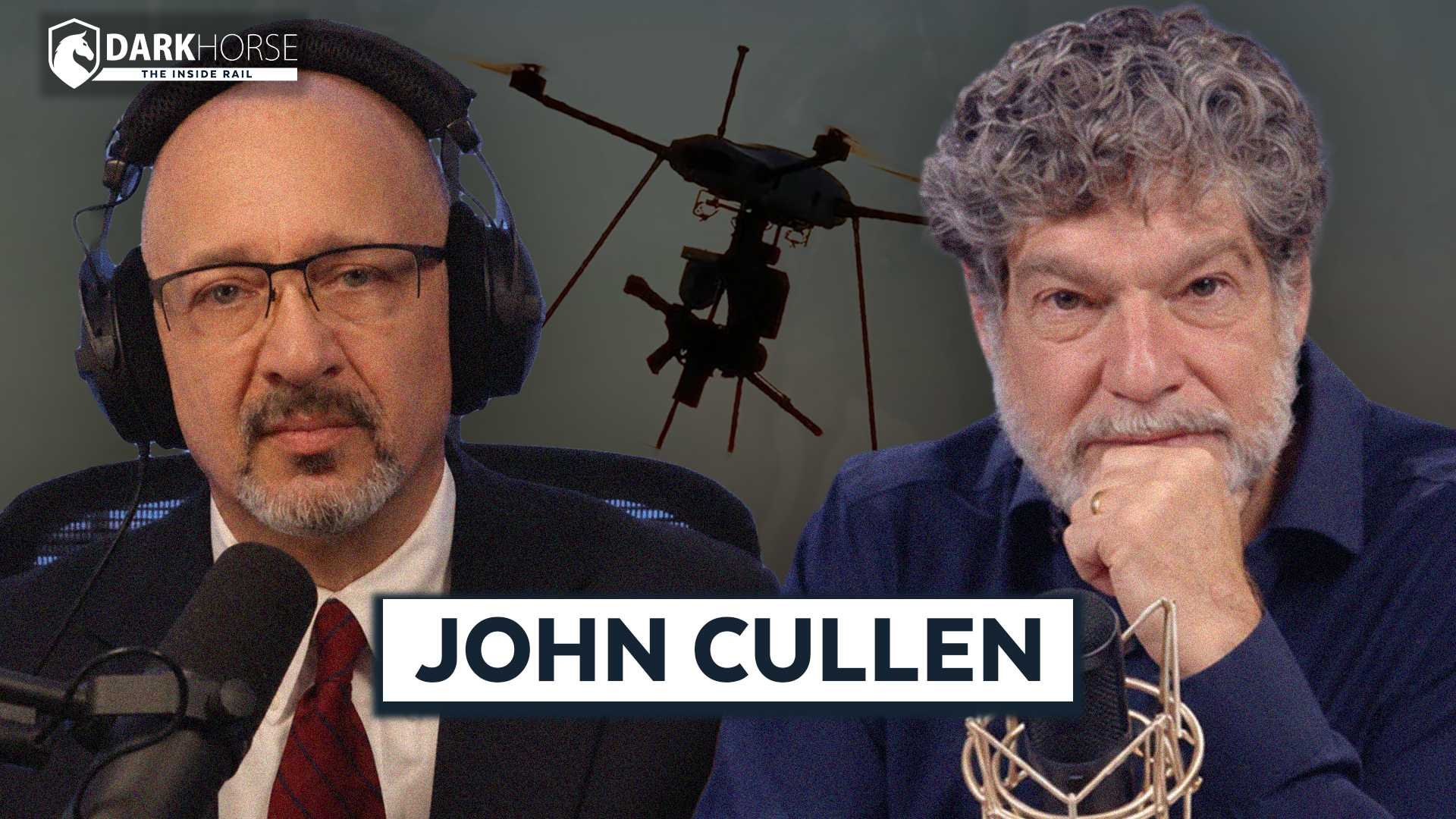
Bret speaks with John Cullen on the subject of the unanswered questions surrounding the assassination of Charlie Kirk and the 2017 Las Vegas shooting.
Youtube: https://youtu.be/7m31LcCTf10
Spotify: https://open.spotify.com/episode/0LEGBkh2yXDTl3QqU38Qid?si=KtxnJF0IT3i4XGhE_Sm0cg
Locals: https://darkhorse.locals.com/post/8227721/the-drone-hypothesis-john-cullen-on-darkhorse
Rumble: https://rumble.com/v7g2ny2-the-drone-hypothesis-john-cullen-on-darkhorse.html
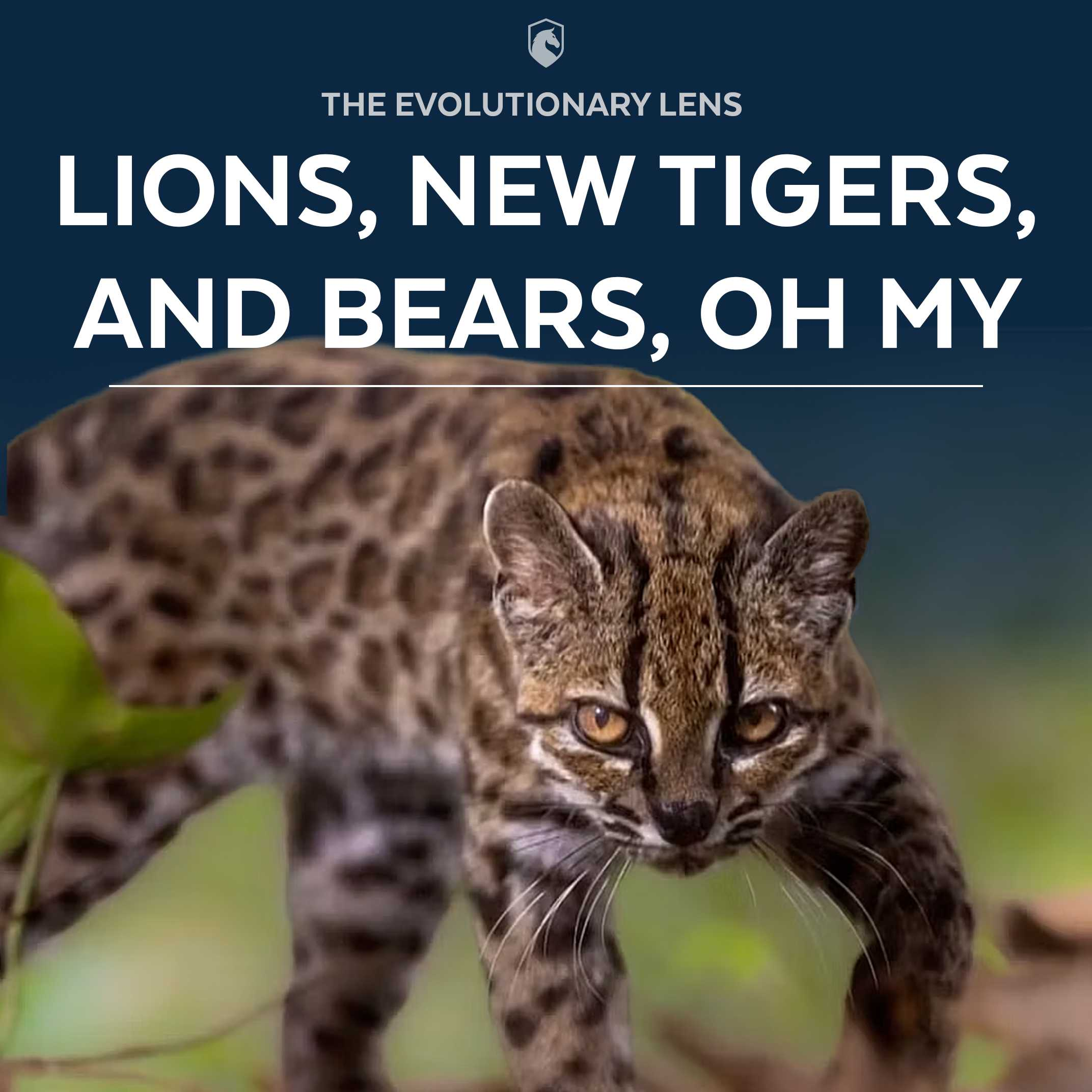
Bret and Heather discuss new cats, fat bears, and overwhelmed frogs. The tilcayo, a newly named species of cat from Bolivia, is part of a group of New World “tiger cats” that live on the outskirts of the Amazon basin. We discuss Carnivoran relationships, cats more specifically, and what is known about the history and ecology of the tilcayo in particular.
Then: it’s fat bear week at Katmai National Park in Alaska, where grizzlies are fattening themselves on salmon for the Winter ahead; we discuss hibernation, reproductive diapause, and general chonkiness in bears.
Finally: female Cope’s gray treefrogs have a harder time choosing good mates when there’s a lot of noise, and when there are too many suitors—kind of like how women often make bad choices when confronted with chaos and wingmen.
Rumble: ...